Category Archives: New Writing

Lament Over Nothing

Lament Over Nothing


Somewhere between the tired moon’s glow and my unfocused eyes
I keep seeing winter—snow heaps when it’s just a white van

Across the street; accumulation on the metal roof next door
instead of the bored shine of a lazy evening rain. Tomorrow

It’s spring, I know, and the rain outside should sound less
like ice and more like the first words of flowers and grass.

Wife! every night you cradle your guitar for an hour and put the spirits
in harmony. Come over here and pick me up! And put me back in tune.

Walking, Noontime, on a Warm Ides of March, Spring Having Arrived A Week Early

sidewalk character

Walking, Noontime, on a Warm Ides of March, Spring Having Arrived A Week Early

So much easier these days to appear middle-aged!
Moon’s out walking too  – only its topmost perimeter,

frosted white, is visible in this nearly spring blue noon sky.
Maybe that’s how I’m seen today

as I pass through quiet intersections:
almost invisible but for the borders of my graying temples.

Night [after and for Mei Yao-ch’en]

NIGHT

日從東溟轉, 夜向西海沉.

The unhurried day drizzles, turns
westward and sinks beneath the sea.

羣物各已息, 衆星燦然森.

All things hold their breath, the stars
just right, glorious like the forest.

蝦蟇將食月, 魑魅爭出陰.

The toad on the moon eats,
the demons strive to come out of the clouds.

阮籍獨不寐, 徘徊起彈琴.

The city dozed fitfully, alone, hesitated,
then rose and picked up its instrument.


*

[Note: This is a first draft of a work based on a poem of Mei Yao-ch’en (1002-1060), about whom I have written many poems on this blog. As with the previous poem I shared, this will likely change greatly from its current state to a final accurate version more worthy of being called a translation. The method I’m following is unusual but feels most natural for me — To write an impression of the poem gathered into my own poem in English, and then to continue to write a poem in English, and another, with the hope that each one gets closer and closer to my friend Sheng-yu’s poem in its traditional Chinese characters, till they are at least close enough to nod at each other or share a bottle of wine.  Chen Zhang, who is busy at Harvard finishing her dissertation while teaching as the Chinese Literary Preceptor up there in Cambridge, furnished me with the traditional characters for Mei’s  poem. I will keep you updated on any new versions. ]

Tonight, with Nothing

Tonight, with Nothing


Tonight, with nothing to say, with all the absent things
crowding around me like a teapot with a parade

of friendly continental guards and crows encircles
tea from China, with all present concerns poured

into an empty cup and spilled for good luck
before drinking, with a mild wind from the south

whispering threats in another language to the last
of the hard-packed plowed snow on the streets,

I remind myself of nothing, and the long envelopment,
and the cup filling with jasmine and spring, and earth.

I Take a Picture of An Icicle Hanging from My House’s Gutter And Even Though the Icicle Drops Seconds Later I Write the Following Poem Composed in One-Line Stanzas I Am Not Prepared to Defend With Any Theory but Insist You Take Seriously For The Moment As If I Really Do Know Why I Did It That Way

frozen moment

I Take a Picture of An Icicle Hanging from My House’s Gutter And Even Though the Icicle Drops Seconds Later I Write the Following Poem Composed in One-Line Stanzas I Am Not Prepared to Defend With Any Theory but Insist You Take Seriously For The Moment As If I Really Do Know Why I Did It That Way

Icicle depending from the gutter and clarity of tree shadow on a snowy roof

Sky the blue of belief though nothing to hold on to

Like us the icicle hanging on lengthened by what’s leaving its way

Beneath it five drops of water like a memory are frozen in time

No telling what is still and what is moving

In your memory like a memory that drop will never change

In an image all about movement nothing will move

The icicle’s shape never seen before never again when I turn again

It has dropped from the gutter like it was never there the blue sky showing no surprise

The shadow of the maple’s high branches on the snowy roof

#FullMoonSocial // Overcast Full Moon Night, After Snow

Overcast Full Moon Night, After Snow

Rain melts snow then turns
to snow: earth slides soft

then stiffens and stills
and disappears under new snow:

Clouds ride endless wind
always leaving: unseen

and unmoved by the mess
and distance, something

of you and I makes its
own slow circle above

Conditions Being What They Are

Conditions Being What They Are


Warm March morning. The sky dropped a foot
of snow on us a week ago and now it rises

in the warm air as fog in the hollows and foothills
disappear as I drive through it. Tonight it’s coming

back down as rain which will be snow before it ends
and I’ll be bending my back to shovel it away

from my car. Three times I will have passed through
it in a week, this same stuff, reconfigured, recycled.

When they buried my uncle a few days ago I knew
if there is a soul it’s like this snow, form a phase only

with respect to specific conditions and maybe
for all that, still surviving, no memory, none,

recognition only a scent like snow before it snows.

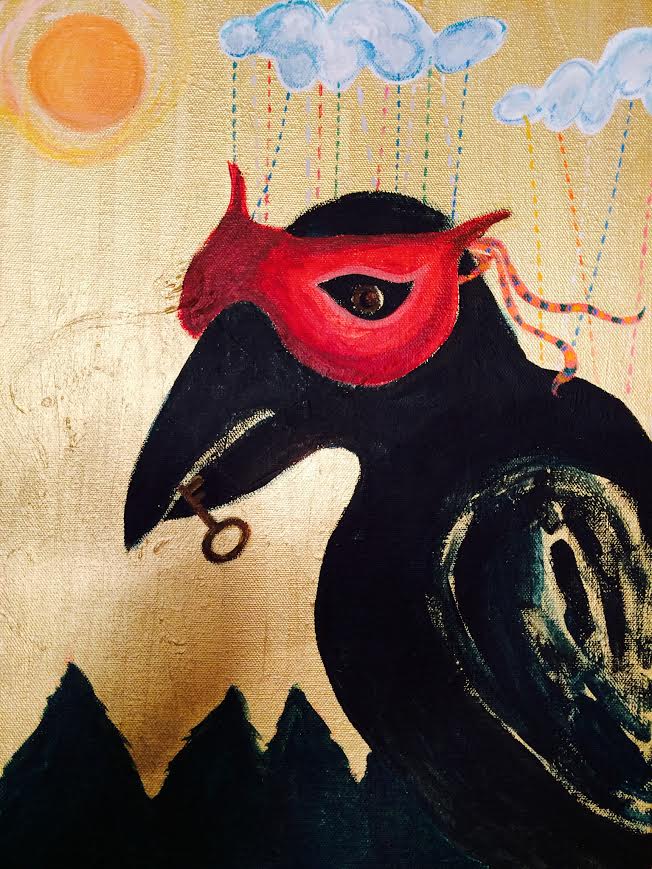
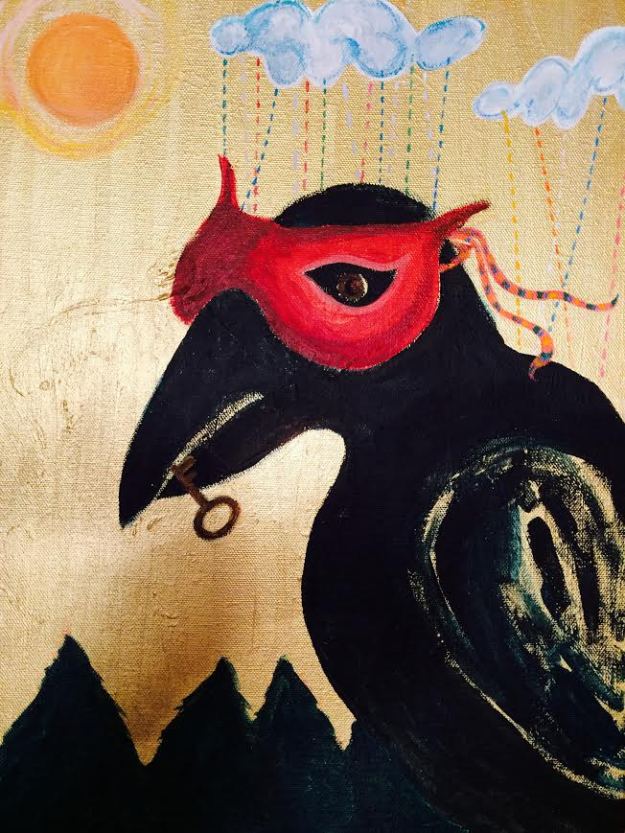
After the Black Crow Comes to Take Me Away, I Compose These Lines

crow

Artwork by Mary Winifred Hood Schwaner


Note: This poem is not a translation but was created by free-associating with the traditional Chinese characters found one of Mei Yao-ch'en's last poems, written over 960 years ago. What's below is more a round of poetic archaeology--like digging up the characters that made up the poem but not knowing how they fit together, and piecing together something entirely different from them. I hope to actually translate this poem properly one day soon, but thought I would share this curious first stage of the work with you. ----JS

After The Black Spirit Comes to Take Me Away, I Compose These Lines

Dark winged spirit, in the olden days even I had compassion for you! I’d tell folks
who’d just as soon spit on you and curse you if fate came their way on your wings

that Oh! the hour could not contain you, you’d overturn your own nest to shoot out
like sound from a plucked string, even to banishment from your old landlord, time.

Well, the history books are wrong! And here you are, stranded as well, so do not be so quick to reproach these days, too, which the master apprehends, like a bullet flicked across the mind,

a thought just passing, now detached. Sure, you can eat till you’re plump in Taicang,
buy a new nest in Kaoshu township, daybreak’s rooster’s not crying for you,

hundreds of birds will argue who can admire it best
but you cannot approach that phoenix, that emperor, or peep down into its celestial fire.

At this moment, to no avail across the warp of the sky your spirit flies north and south—
Its shadow falls on the cunning rabbit but cannot peck its eyes, or separate the thief from his base.

It’s more complex now that I’m dead, detesting the person with noble aspirations is not the same as becoming fond of this tiny bird that’s come around. I know I’m not either kind,

contrary to who I am, as if I flourished in the Qin or Han dynasties, brave and chivalrous!
Want some advice? Distance yourself from your reputation, Crow. I’ll just carry on on foot. I’ve got

something final to look after.