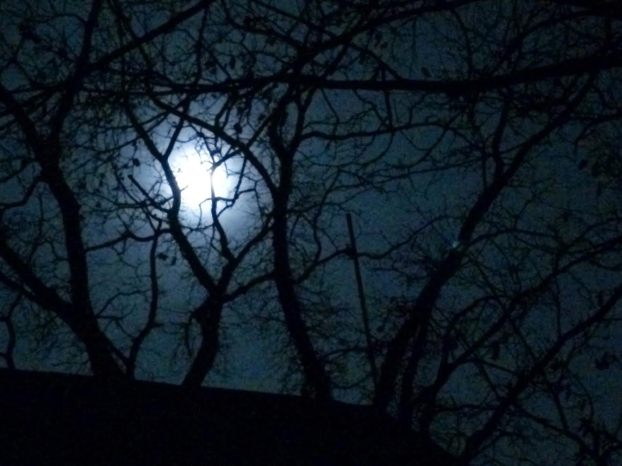
 A few stones shine like full moons. –Tomas Tranströmer The name of this site is based on the idea that even the poems we write in our native language are translations of a kind, coming to us through a process which must transform source material from a language with no words, to borrow a phrase from the poet Tomas Tranströmer, into the words of our own language. I’m happy to report that the site now will actually include an actual “translation from the English”—what follows is a translation of my poem “For Tomas Tranströmer,” written on January 14th, rendered thoughtfully and also somewhat spontaneously into Swedish by James Wine—as he was showing the poem to Tranströmer himself, just twelve days after its composition… Plenty of back-story below, but first here’s the poem in Wine’s Swedish translation, followed by the work in its original English:
For Tomas Tranströmer
Isen på vägen ser oss med våra egna ögon och det är inte bättre än vad vi är på att hjälpa oss själva som riktningsändringar. På vinter långt söder om här, vaktas den stilla vattnets kanten fortfarande av cypresser knän, som en trött armé som låg på ryggen och tog en tupplur utan att hitta en anledning för att stiga upp. Långt borta hörde jag vrål av en tjur alligator som hävdar världen. Genom en kall vår majsfält tusen mil bort, stirrande på stormens vind springa förbi innan den kunde höras eller kännas, jag vet att allt kan begäras, som dessa minnen–är de oändliga chanser att säga hej bara ett rop över slumrande? Kan vindens våld äntligen höra oss med våra öron? Jag kommer att sitta här med dig ett tag och se vad som kommer. * The ice on the road sees us with our own eyes and is no better than we are at helping ourselves as direction changes. In a winter far south of here, the edge of still water is guarded by cypress knees, like a tired army that lay on their backs for a nap and never found a reason to get up. Beyond them I heard the bellow of a bull alligator claiming the world. By a cold spring corn field a thousand miles away, watching the storm’s wind sprint across before it could be heard or felt, I know everything can be claimed, like these memories—are the endless chances to say hello merely a shout over the slumbering? Is the wind with its violence finally hearing us with our ears? I will sit here with you for a while and see what comes. (If you go to Google translate you can hear the sound of the Swedish, at least as well as the Translate robot can figure out free verse poetry… you can also see that the translation, re-translated into English, renders pretty faithfully.)
The Astor-Piazzolla-like Nature of Time
Readers of this site know that I’m an admirer of the poetry of Tomas Transtromer. You see a line of his on the site’s banner, and I have also posted an appreciation for his work here. I’ve been reading Transtromer for over twenty-five years; I first encountered his work in 1989 in the Cambridge Public Library, stumbling across the Ecco Press collection of his work edited by Robert Hass and including translations by a nearly a dozen different translators. I can still remember standing in the stacks and reading the opening lines of “Prelude,” the first poem in TT’s first book from 1954, and thinking how that poem had waited 35 years from its first publication to reach me but flowered immediately in my mind as if it were being written while I stood there, somewhat dumbfounded, that such a great poet could exist without me knowing about him (as someone fresh from a university tends to think), and read it again and again. Twenty five years later and exactly a month ago from this evening, film-maker James Wine wrote me to let me know that he was releasing a film of Transtromer’s poem “Baltics,” read by the author himself in 1990. The film never usurps the author’s voice, instead furnishes images of the landscape of the poem without intruding on the marvelous effect of the writing itself (subtitles in English are the translation of Mr Wine and a group of friends). Mr Wine contacted me because he’d found this site while searching the web for traces of Transtromer’s global following, which is indeed large, to help pass on news about the film. I viewed the film and wrote about it here, and have since watched the film a few more times—there seem to be more wonderful lines in that one poem than many poets find in a lifetime, and the film provides local context for some of the imagery in the poem while at the same time managing not to diminish anything; rather than explaining, it amplifies the wonders of the poem. Seeing the film inspired me to write the poem, although I did not send it to Mr Wine. It was discovered by one of his colleagues, and he wrote to me a week later, saying he’d like to show it to the poet himself. You can imagine, given the above, how excited I was (and still am) to know that this poem reached the poet himself, and in such short order. In fact, I felt the accordion-like nature of time contracting in a whirligig musical crescendo which might be comparable to finding oneself thrown into a scene in a Thomas Pynchon novel, re-created in a film by Fellini, with a soundtrack by Astor Piazzolla: thirty-five years between when Transtromer wrote “Prelude” and when an awkward American grad student first encountered it; twenty-five years of avid reading followed; then, after an out-of-the-internet-blue email from Mr Wine, a mere twelve days between when I composed a poem honoring my favorite poet and when the poet himself saw it in English, and heard it in Swedish thanks to the work of Mr Wine. As he wrote to me later, “We had a good time with the translating!” *
So, Translate this poem!
That line from Mr Wine gave me an idea. I know many of this site’s readers are also writers and poets; and many of you visit here from lands quite far-away from the Blue Ridge mountains here in Virginia—from China, from Turkey, from Manila, from Spain and Italy and even from Boston, where I know from experience the English language is just a little bit different… So why don’t you take a shot at translating this poem into your own native language? If it creates one more reader of Tranströmer as a result, you’ll have done a great deed. And I’m curious, from a somewhat philosophical perspective as a writer, what the problems and rewards are of translating one of my own works into another language. I’ll put up a new page on the site’s banner where any new translations can be posted and compiled, and would like to hear from any intrepid souls who attempt this exactly what the experience was like. I know the poem itself, as well-meaning as it is, is much more a stone than a full moon; but seeing it translated into Swedish, and knowing that it reached its intended audience, made it shine a little bit brighter to me. My great thanks and appreciation to James Wine, not only for bringing this poem to Mr Tranströmer’s attention, but also for providing his translation for me to post here.


 Translations from the English